
Sunderland Minster Provost Defends Trans Women’s Toilet Access
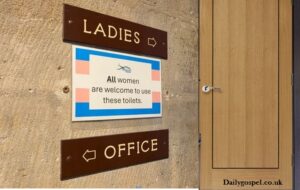
Sunderland Minster Provost Defends Inclusive Toilet Sign for Trans Women
The Provost of Sunderland Minster, Canon Clare MacLaren, has defended the church’s decision to display a sign welcoming trans women to use its women’s toilets, stating that transgender people deserve the same privacy, dignity, and safety as everyone else.
“The sign, which read, “All women are welcome to use these toilets,” attracted public attention after an image of it was shared on social media. The accompanying post reportedly described the message as a response to the UK Supreme Court’s interpretation of sex as a biological characteristic.
“The post also suggested that any woman who felt uncomfortable could request assistance from a clergy member or volunteer when using the facilities. However, Canon MacLaren later confirmed that the sign had been removed after concerns that volunteers could become targets of abuse.
“The issue arises amid ongoing discussions about guidance following a Supreme Court ruling that clarified the meaning of “sex” under the Equality Act as biological sex rather than gender identity. Following the judgment, the Equality and Human Rights Commission (EHRC) produced updated guidance, which was recently approved by the Government.
The guidance states that single-sex spaces, including toilets, should generally be used according to biological sex, while transgender people may be provided with separate gender-neutral facilities. Responding to criticism, Canon MacLaren pointed out that the EHRC code itself notes that it does not create new legal obligations and is not a definitive interpretation of the law.
“She argued that Sunderland Minster is not acting unlawfully and explained that the church’s historic building has limited toilet facilities that would be expensive and difficult to redesign. She also noted that the toilets consist of private cubicles, with only the hand-washing area being shared.
The Provost emphasized the church’s safeguarding responsibilities, saying that transgender and non-binary members of the congregation often feel vulnerable and fearful of hostility. She expressed regret that some people believe transgender individuals pose a threat to others using the facilities.
“The church’s stance has attracted criticism from campaigners and advocacy groups. Some have argued that the sign conflicted with the legal position clarified by the Supreme Court and the guidance issued by the EHRC. Critics warned that continuing such policies could expose the church to legal challenges from women’s rights groups.
Representatives of campaign organizations supporting single-sex spaces stressed that equality legislation must be followed regardless of personal or religious views. They also said that some women associated with the Minster felt their concerns were being overlooked.
“In response, the Diocese of Durham stated that churches are encouraged to show care and respect to all individuals while ensuring that their policies remain within the law. The diocese also confirmed that it is helping parishes understand and apply the latest guidance.
The Church of England has previously encouraged a pastoral approach to issues involving gender identity, emphasizing respect for the dignity of every person while acknowledging that both transgender people and women may have deeply held concerns and experiences related to the debate.
“The Bishop of Manchester, Dr David Walker, recently expressed concern that the updated interpretation of equality law could create anxiety among transgender people. He argued that nobody should face challenges or confrontation when using public facilities and warned against attempts to use the ruling to marginalize transgender individuals.
At the same time, he stressed that churches must find ways to uphold the law while continuing to offer a welcoming environment to transgender worshippers.
“Following the controversy, Sunderland Minster’s Parochial Church Council (PCC) issued a statement explaining that trustees had not approved the original social media post and would not have supported its publication. The PCC confirmed that both the sign and the online post had been removed.
The council also announced that it is seeking advice from the EHRC, reviewing internal policies, and working closely with the Diocese of Durham’s safeguarding team. It apologised to anyone who had been distressed by the situation.
“Despite the disagreement, the PCC reaffirmed Sunderland Minster’s commitment to providing pastoral care to all people and maintaining its membership within the Inclusive Church network, which seeks to challenge discrimination and promote equality within the Church.